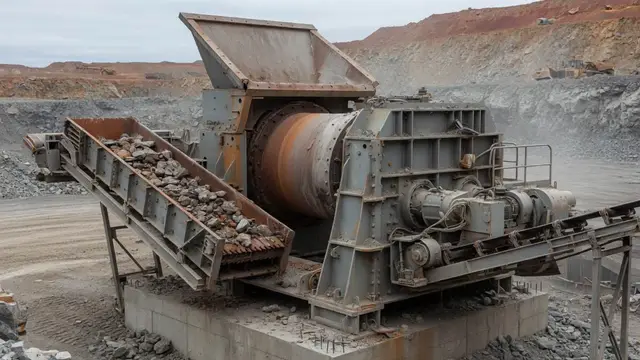
Primary crushing
RC-J1200 Jaw Crusher
Primary jaw, 1 200 × 900 mm gape, for granite and basalt ROM. Hydraulic CSS from the control room.
380–520 t/h granite · CSS 125–200 mm
Full spec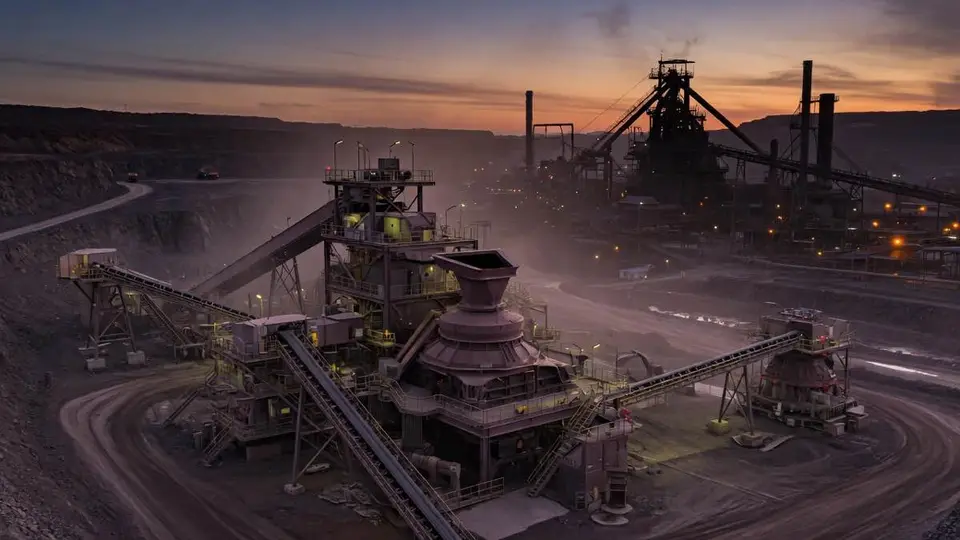
Ridgecast designs and builds crushing, screening, and conveying plants for hard-rock mines and quarries. One office, one drawing set, one name on the handover — from ROM intake to the stockpile belt.
Most plant failures are paper failures — a balance that never closed, a liner nobody stocked. Ridgecast keeps the whole chain in one office so the numbers survive contact with rock.
Circuits are sized from your UCS, abrasion index, and a 200 kg PSD — never from a catalogue t/h. Circuit design →
First article ships with a liner set and the dimension sheet. Every repeat part goes out against the same drawing number. The machines →
CSS, stroke, and amps at the agreed t/h, signed on the pad at first ore. That sheet drives your wear forecast for the next six months. Commissioning →
Each machine is sized to sit in a Ridgecast circuit — gape to CSS to deck cut to belt width. They also sell standalone, against the same drawings.
Primary jaw, 1 200 × 900 mm gape, for granite and basalt ROM. Hydraulic CSS from the control room.
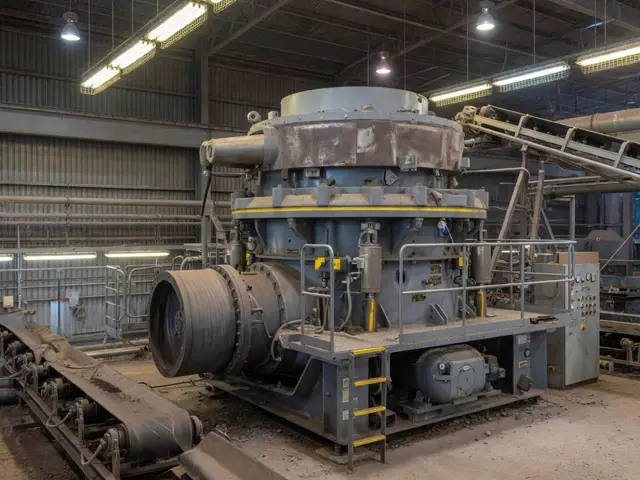
Secondary cone, 900 mm head, closed circuit with the RC-S2460 screen.
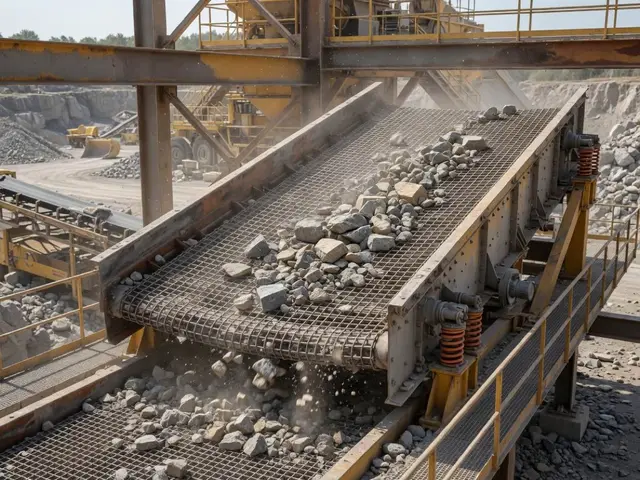
2.4 × 6.0 m triple-deck screen, modules for wire or PU.
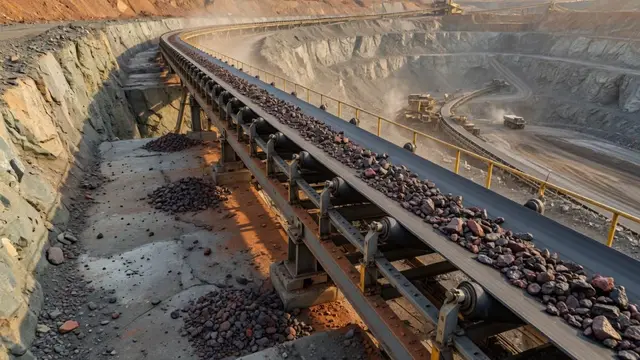
1 200 mm overland belt in modules, transfer tower included.
Ridgecast sells circuits, not crates. Each programme ships as a mass balance, a steel list, the machines, and the first wear set — with civil and HV on the mine's side of the fence, in writing.
Jaw, cone, screen, and overland belt as one circuit, with mass balance and first wear set. 400 t/h nominal; 16-week first circuit
Low-headroom secondary plant for decline and shaft-fed ore. 180 t/h in 4.2 m headroom
Three services cover the life of a Ridgecast plant: the balance before the steel, the crew at first ore, and the liners for as long as the pit pushes back.

Mass balance, steel list, and wear forecast from a rock sample and a product spec.
What's deliveredPad supervision, first ore, and a signed CSS and stroke sheet.
What's delivered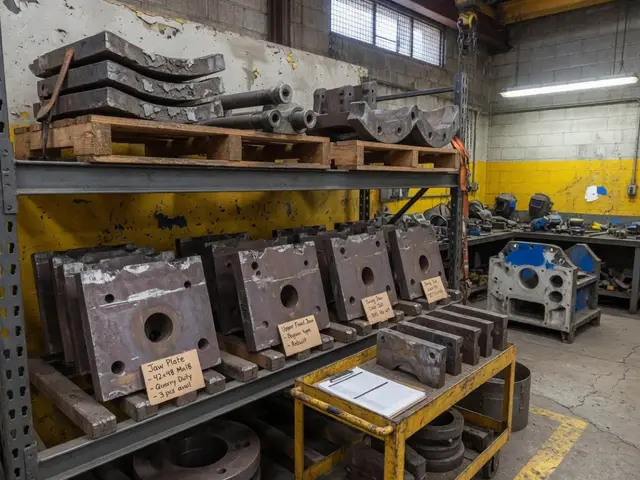
Liners and mesh on the original drawing number, or a reline crew on a cycle.
What's deliveredTell the applications desk the rock, the target product, and whether it's a pit, a decline, or a quarry. An engineer replies within three working days with a first view on tonnage and a first-steel date.